KMS
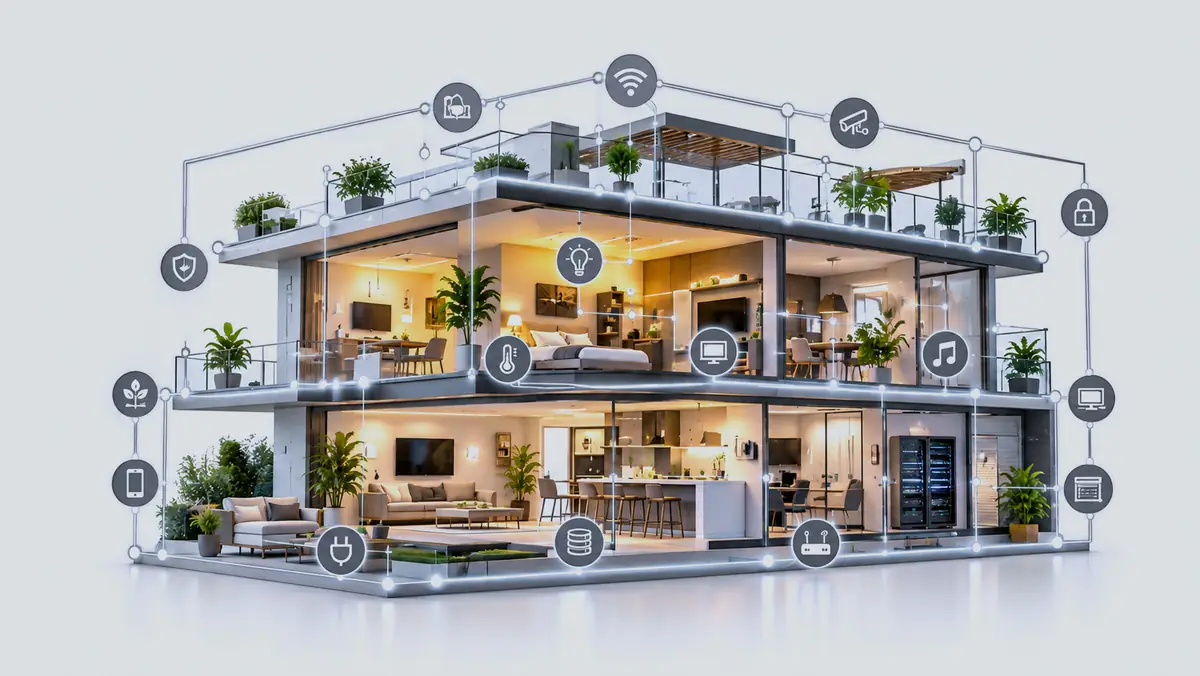
Cutaway of a home with lighting, climate, security, Wi-Fi and audio connected in one smart system

Smart Building & Automation

Building automation that makes your systems work as one.

Automation and centralized control of lighting, climate, energy and building systems — for commercial buildings and private homes alike.

Smart Building & Automation

Building systems should behave as one

A building where lighting, heating, cooling, blinds and sensors are controlled by separate systems costs time and energy every day. The issue is rarely the equipment itself — it is planning and integration.

KMS designs and integrates building automation: BMS and KNX, lighting and HVAC control, energy monitoring, environmental and safety sensors, centralized control panels and the scenarios that tie them together — in commercial buildings and in smart homes.

What we solve

  • 01

    Disconnected systems

    Lighting, climate and other building systems each have their own controls and logic.

  • 02

    No visibility of energy use

    Without monitoring, there is no basis for improving consumption.

  • 03

    Problems found too late

    Leaks, smoke or abnormal temperatures are noticed only after damage is done.

  • 04

    Automation nobody uses

    Controls are complicated, so the system is bypassed in daily use.

The KMS approach

We design around how the building and its spaces are used, then integrate the systems so they behave as one.

  • Use-case first

    Occupancy, operating hours and daily routines define the control logic.

  • Integrated control

    Scenarios connect lighting, climate, blinds, sensors and other systems where it adds value.

  • Network-ready

    Automation is planned into the network and cabling from the start.

  • Simple operation

    Central panels and familiar controls; users receive clear instructions at handover.

Smart Building & Automation

Scope of work

  • Building Management System (BMS)
  • Smart Building automation
  • Smart Home systems
  • KNX automation
  • Automated lighting control
  • Climate and HVAC system control
  • Heating and cooling automation
  • Motorized curtain and blind control
  • Energy consumption monitoring
  • Energy efficiency management systems
  • Motion and occupancy sensors
  • Temperature and humidity sensors
  • Water leak detection systems
  • Smoke and environmental monitoring sensors
  • Automatic irrigation systems
  • Smart home scenarios
  • Centralized control panels
  • IoT device integration
  • Interconnection of building engineering systems

Two directions, two audiences

01

Smart Building

For owners and facility managers of offices, hotels, clinics and commercial buildings.

Centralized management of building engineering systems — so the facility team sees how the building operates, controls it from one place and has a basis for reducing energy use.

  • Building Management System (BMS)
  • HVAC, heating and cooling control
  • Lighting control by zone, schedule and occupancy
  • Energy consumption monitoring
  • Central control and monitoring of engineering systems
  • Integration with network, security and other building systems
02

Smart Home

For private houses, villas and apartments.

Comfortable, safe and simple control of the home — lighting, climate, blinds and sensors working together through scenarios, from a wall panel, a switch or a phone.

  • KNX automation and home scenarios
  • Lighting control
  • Climate control
  • Motorized curtains and blinds
  • Water leak and smoke sensors
  • Automatic irrigation
  • Central control panels

Technical capabilities

  • BMS & KNX

    Building management and KNX automation for coordinated control of building systems.

  • Lighting & blinds

    Automated lighting control, motorized curtains and blinds driven by schedules, occupancy and scenarios.

  • Climate & HVAC

    Heating, cooling and HVAC control with temperature and humidity sensing.

  • Energy monitoring

    Consumption monitoring and energy efficiency management as a basis for improvement.

  • Safety sensors

    Water leak detection, smoke and environmental monitoring sensors.

  • Control & integration

    Centralized control panels, IoT device integration and interconnection of engineering systems.

Project methodology

  1. 1

    Discovery

    How the building and its spaces are used, by whom and when.

  2. 2

    Design

    Operating modes and scenarios first; then system architecture, control logic, equipment specification and cabling.

  3. 3

    Coordination

    Alignment with electrical, HVAC, interior and network works.

  4. 4

    Installation & programming

    Devices, controllers and sensors installed; scenarios programmed.

  5. 5

    Testing

    Functional tests of every zone and scenario against agreed criteria.

  6. 6

    Handover

    User instructions, documentation and support terms.

Honest about existing buildings

Automation controls engineering equipment — HVAC, heating, lighting — but does not replace its design: supplying and installing that equipment is agreed separately or stays with the specialist contractors we coordinate with. Smoke sensors in an automation system do not replace a fire alarm system. In existing buildings some functions can be added without new cabling, while others — some types of zoned climate control, for example — need wiring; we say clearly what is possible before the scope is agreed.

Smart Building & Automation

What you receive

Lighting, climate, blinds, sensors and energy data brought into one control logic: the facility team or residents run the building from a panel, a switch or a phone — and every zone and scenario was tested before handover.

Depending on project scope, the design and handover documents include:

  • Operating modes & scenarios

    A written description of the modes and scenarios agreed before equipment is selected.

  • System architecture & specification

    Controllers, protocols, devices and their connections, with the equipment specification.

  • Control logic

    How schedules, occupancy and sensors drive lighting, climate and blinds in each zone.

  • Functional test results

    Every zone and scenario checked against the agreed criteria.

  • User instructions

    How to run the building or home day to day — from panels, switches and the phone.

  • Administrator documentation

    Documentation for the facility team and recommendations for later stages of expansion.

Frequently asked questions

Do you work with residential projects?

Yes. Smart home systems for houses, villas and apartments — lighting, climate, blinds, sensors and scenarios — are part of this direction.

Can automation be added to an existing building?

Often yes, depending on the existing electrical, HVAC and network infrastructure. We assess this first and explain what requires additional cabling.

Is the system tied to one manufacturer?

No. Equipment and protocols are selected for the task, and we explain the technical and financial differences between alternatives.

Can it be deployed in stages?

Yes. A common route is to start with the core — network, controller, lighting and climate — and add further systems over time.

Can automation help reduce energy use?

Energy consumption monitoring and energy efficiency management are part of this direction. They show where energy is used and allow lighting and climate to follow real occupancy; the actual effect depends on the building, so we do not promise generic savings figures.

Can leak and smoke sensors be included?

Yes. Water leak detection, smoke and environmental sensors, and temperature and humidity sensors can be part of the system and trigger alerts or scenarios.

Can existing engineering systems be connected?

Often yes. Interconnecting building engineering systems and integrating IoT devices is part of this direction; we first check which existing systems offer a suitable interface.

Useful reading on this topic

All articles

Planning automation for a building or a home?

Tell us how the spaces are used, which systems are already installed and what stage construction or fit-out has reached. The earlier automation is planned, the more options remain open.